Oxford Brain Story

For Professionals

The Brain Story aims to articulate the science of early development and how experiences can shape the developing brain. We can utilise this science to understand our own Brain Story, inform our work with other people and drive service configuration and delivery.

Everyone was a child once, so the Oxford Brain Story is a lifespan story and relevant to people of all ages. The Brain Story uses a series of short metaphors to communicate the science in an easily accessible format. Each metaphor is underpinned by well-evidenced, peer reviewed research, with a wealth of resources for different audiences with varying levels of prior knowledge.

 
BannerImage_Professionals (1).png

oxford brain story training pathway

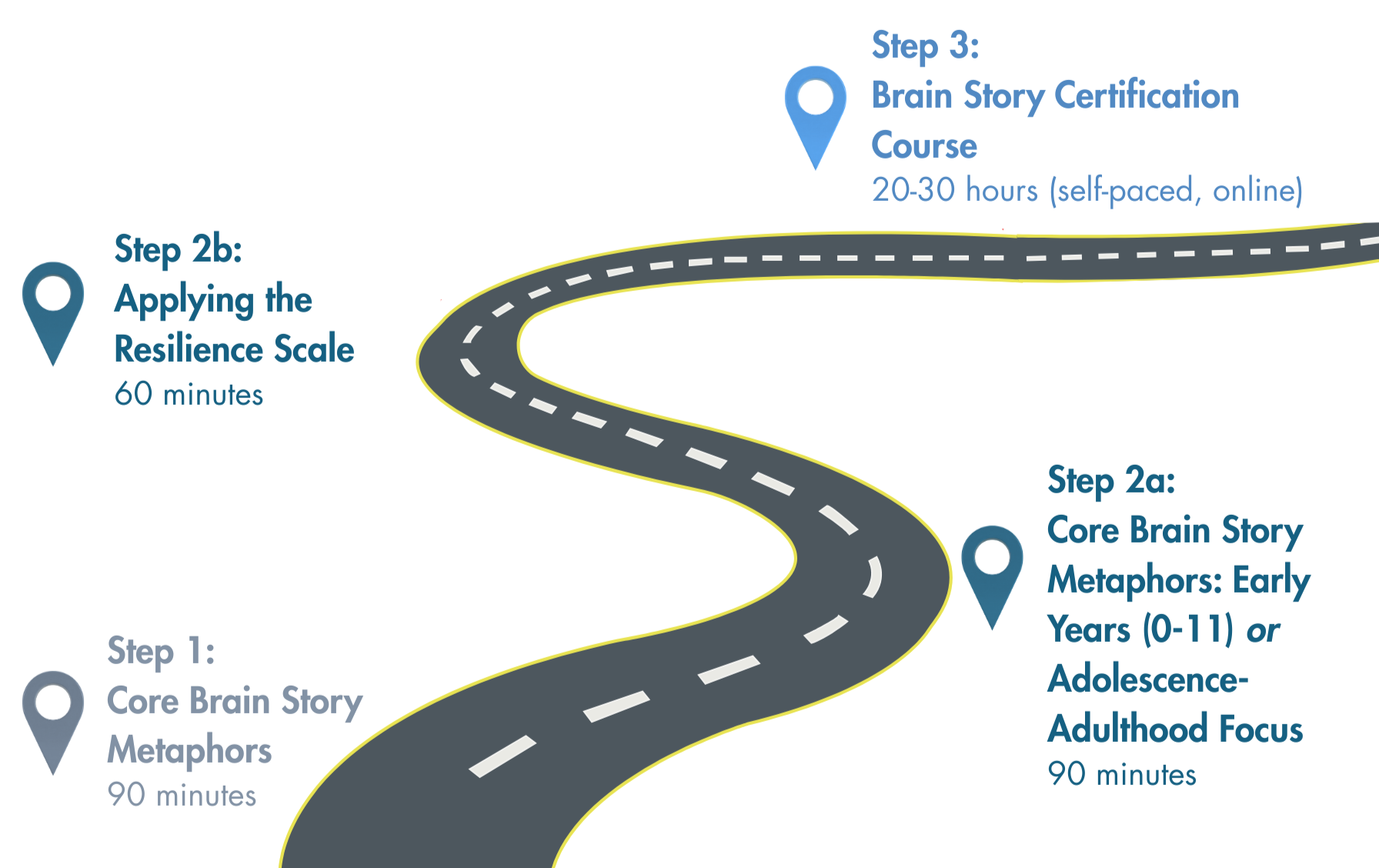
For professionals interested in learning more about the Brain Story, we offer a three-step training approach.

All Oxford Brain Story training events are free to access, and most sessions are virtual. Our home page lists current training opportunities. We also host bespoke sessions for groups of 40+ (please contact us).


Step 1: Core Brain Story Metaphors

This 90-minute training session presents the core metaphors of the Brain Story, along with their underlying science. Attend to learn more about the fundamentals of brain development and to participate in engaging micro sessions that apply this knowledge into practice.

This is relevant to anyone working with children, adults or families.


Step 2b: Applying the resilience scale

This 60-minute training session is hosted by the Palix Foundation’s Alberta Family Wellness Initiative. It focuses on the Resilience Scale metaphor, highlighting its application at the individual, organisational and systems levels. Anyone is welcome to attend, but frontline workers are especially encouraged.

Please complete Step 1 and Step 2a training before attending this session.

Step 2a: early years or adolescence focus

This 90-minute training session presents more in-depth content on the core Brain Story metaphors, with a focus on either the early years and childhood (0-11-years-old) or adolescence. This training also includes engaging micro sessions that facilitate application of this knowledge into practice. Anyone is welcome to attend, but frontline workers are especially encouraged. Choose the session based on the most relevant age group for you (or attend both!).

Please complete Step 1 before attending this session.


Step 3: Brain Story Certification

This free, online, asynchronous course is for professionals seeking a deeper understanding of brain development and its consequences for resilience and lifelong health.

  • Videos of more than 30 leading experts in neurobiology and mental health

  • Certification in Brain Story science

  • 19 modules (self-paced)

Brain Story Certification is a course endorsed by our Curriculum Committee. For a comprehensive description of the course contents, download the course outline. Looking for more detailed information? Find our Feedback Report here.

Anyone is welcome to register, but managers & strategic leads are especially encouraged.

Start Building Brains

How do experiences build brains? These resources are a good starting place for learning concepts like brain architecture, serve and return, toxic stress and air traffic control. These metaphors have been tested widely to ensure they impart an accurate understanding of the science to both professional and public audiences.

Contact us if you would like to play the Brain Architecture game withyour team.

 
BrainArchitecturePanel.png
 

Brain Story Toolkit

Use these free, open access, downloadable resources to share key messages about brain development for professional and public audiences.


How Brains Are Built

Palix Foundation | October 2013

Learn the core story of brain development in this accessible and visually engaging video…Show More

Watch Video

Brain Architecture

Palix Foundation | June 2014

This video uses expert commentary and animation to demonstrate the important relationship between… Show More

Watch Video

Serve & Return

Palix Foundation | June 2014

Through animation and expert commentary, this video describes the early interactions th…Show More

Watch Video

Executive Function: Air Traffic Control

Palix Foundation | October 2013

This video discusses the importance of executive function, or the air traffic control system of… Show More

Watch Video

Toxic Stress

Palix Foundation | June 2014

Using illustrations, this video shares multi-method research findings about how to talk about…Show More

Watch Video

Learning Cards

Palix Foundation | February 2018

Playful but packed with important information, this scientific (and cinematic) video explain…Show More

Download Cards

A Real-Life application of the resilience scale with rcmp superintendent mike mccauley

Palix Foundation | May 2025

In this video, Superintendent Mike McCauley of the Alberta Royal Canadian Mounted Police shares…Show More

Watch Video


Visit The AFWI Resource Library

For many more free learning resources, visit the AFWI Resource Library.

 
BrainstoryBackground.jpg